




Handheld gaming 2026 looks very different from the portable gaming market of the past.
Nintendo is pushing forward with Switch 2. Valve has established Steam Deck as a portable PC gaming platform. Meanwhile, Microsoft and ASUS have brought Xbox deeper into handheld gaming with the ROG Xbox Ally family.
These systems don’t simply offer small games designed for portable devices.
Players can now take major console and PC games almost anywhere.
That raises an interesting question. Are handhelds becoming the future of gaming?
Handheld Gaming 2026 Is More Than Nintendo
Nintendo has dominated modern handheld gaming for years.
The original Switch proved that millions of players liked having one system that could move between a television and portable play.
Nintendo Switch 2 continues that idea with considerably more capable hardware.
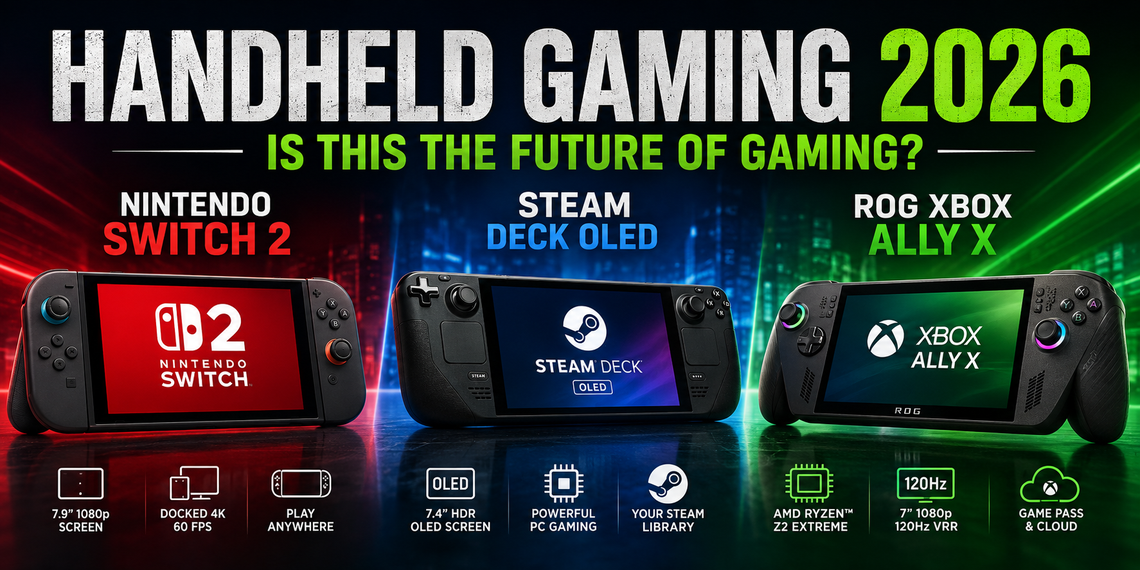
The system features a 7.9-inch 1080p display with HDR and variable refresh rates up to 120Hz. It can also output up to 4K at 60 fps when docked with compatible games and displays.
However, Nintendo is no longer alone.
PC gaming has entered the handheld market in a major way.
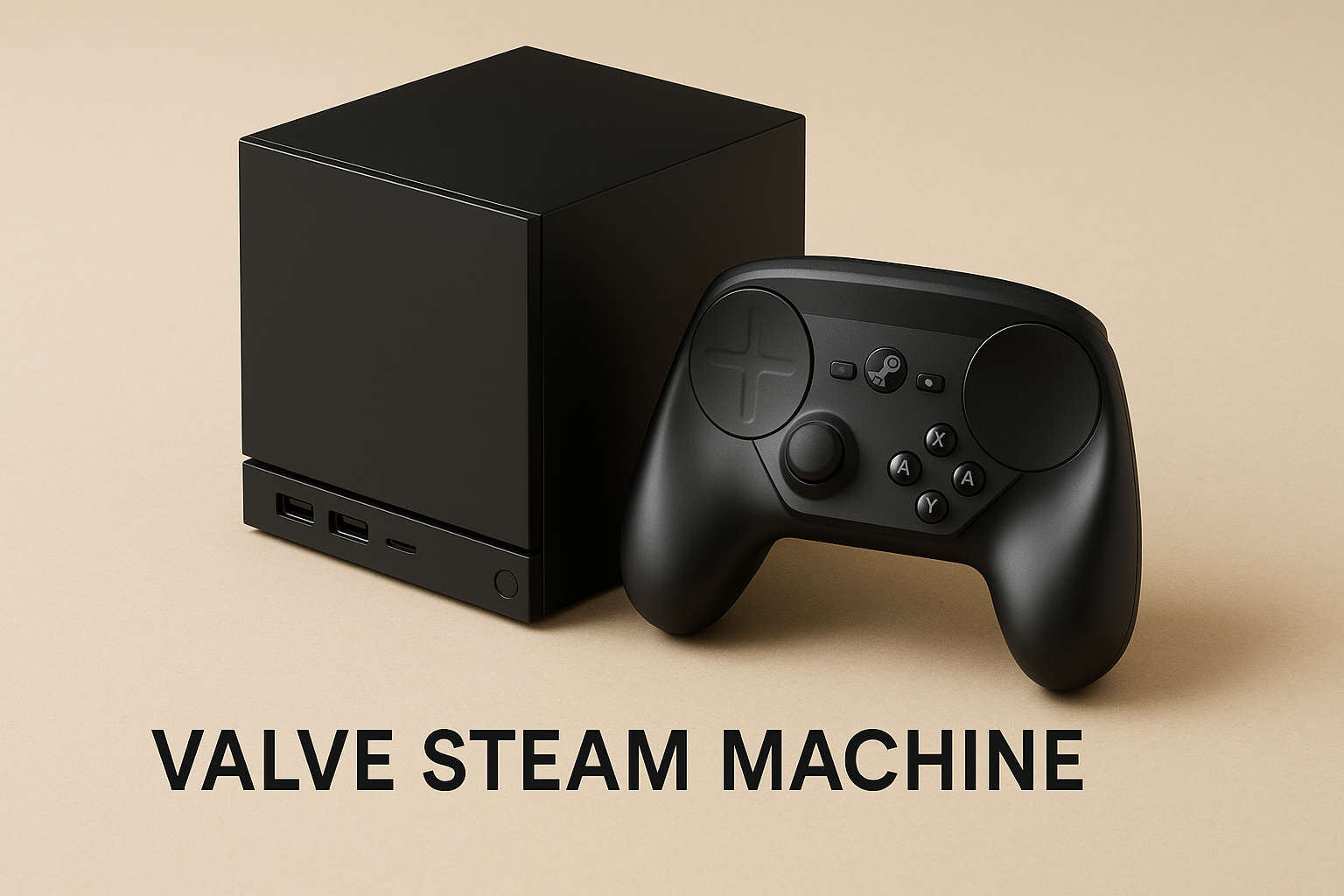
Steam Deck Changed Portable PC Gaming
Valve’s Steam Deck helped show that a large PC game library could work on a dedicated handheld.
Instead of buying a separate collection of handheld games, Steam users can access compatible games from a library they may have been building for years.
The current Steam Deck OLED has a 7.4-inch HDR OLED display with a refresh rate up to 90Hz. It includes 16GB of memory and is available with 512GB or 1TB of NVMe storage. Valve estimates between three and 12 hours of gameplay depending on how the system is being used.
That combination gives PC gamers something that was difficult to imagine not long ago.
Their PC library doesn’t necessarily have to stay at their desk.
Xbox Is Taking Handheld Gaming Seriously
Xbox has also moved deeper into the handheld market.
The ROG Xbox Ally and ROG Xbox Ally X are Windows 11 handhelds developed with ASUS.
The standard ROG Xbox Ally includes a Ryzen Z2 A processor, 16GB of memory and 512GB of storage.
The more powerful Ally X moves to a Ryzen AI Z2 Extreme processor, 24GB of memory and 1TB of storage.
Both use a 7-inch 1080p display with a 120Hz refresh rate and FreeSync Premium.
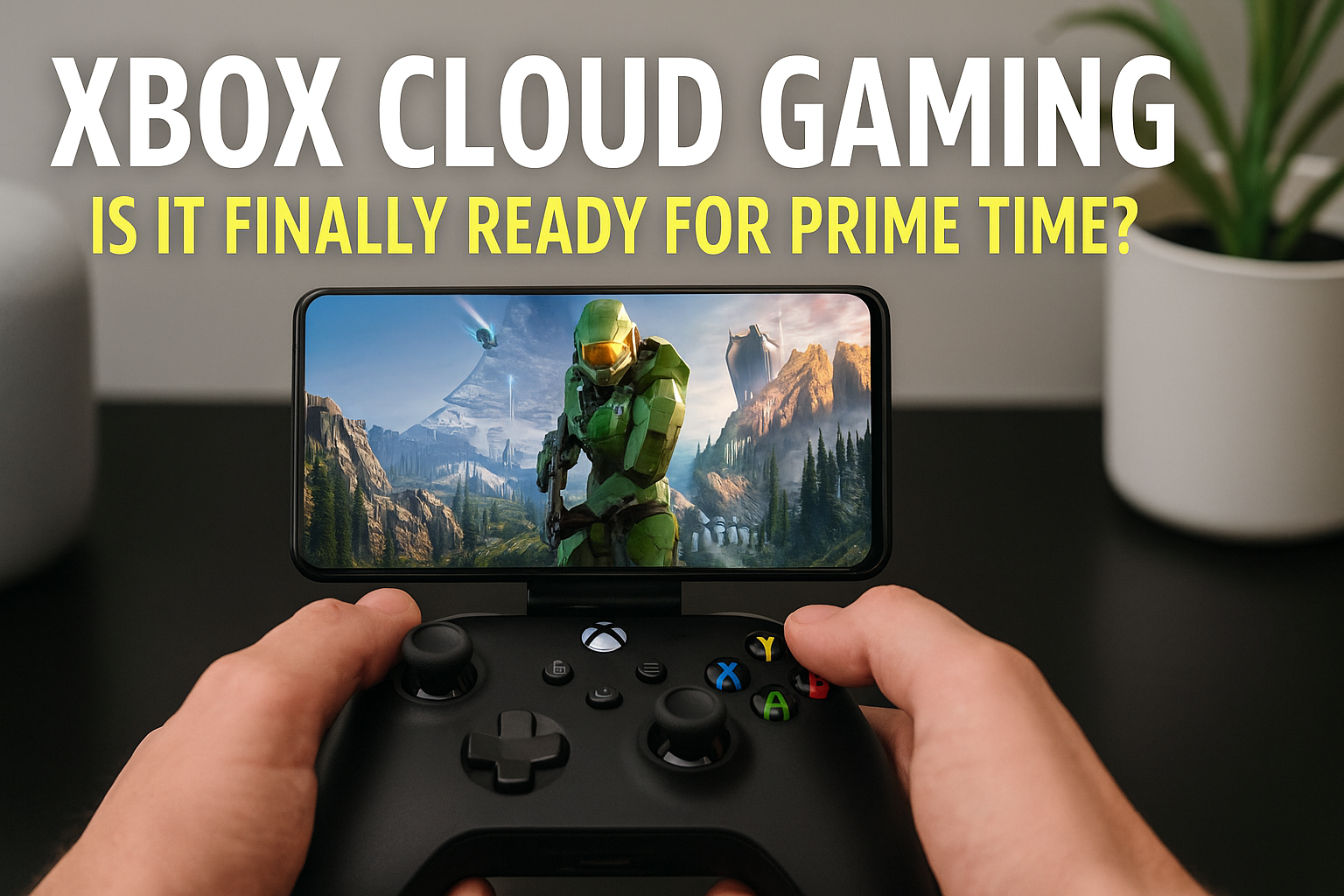
Microsoft is also promoting Xbox Game Pass, cloud gaming, Xbox Play Anywhere and synchronized saves as important parts of its handheld strategy.
That means an Xbox player’s games and progress can increasingly follow them across different devices.
The Biggest Advantage Is Your Existing Library
This could be one of the most important reasons handheld gaming is growing.
Players don’t necessarily want to start another game collection every time they buy new hardware.
Steam Deck gives PC players access to compatible games from their Steam libraries.
Xbox is pushing Play Anywhere so supported games, saves and achievements can move between Xbox and Windows devices.
Nintendo Switch 2 can also play compatible physical and digital Nintendo Switch games.
That makes buying a handheld easier to justify.
The device can become another way to play games you already own.
Handhelds Fit Around Everyday Life
Not everyone has several uninterrupted hours to sit in front of a television.
Handheld gaming changes that.
You can play on the couch while someone else uses the TV. You can continue a game in bed. You can bring the system on a trip or play during a break.
That convenience matters.
A handheld doesn’t necessarily need to outperform a powerful gaming PC or home console.
It needs to make gaming easier to fit into your day.
For many players, that can be more valuable than having the highest possible graphics settings.
Handheld PCs Still Have Problems
Portable PC gaming isn’t perfect.
Battery life remains one of the biggest limitations.
Running demanding PC games requires power. Increasing performance, resolution and frame rates can reduce how long a handheld lasts away from a charger.
Size is another issue.
Devices such as Steam Deck and ROG Xbox Ally are portable, but they aren’t exactly pocket-sized.
Windows can also create challenges on handheld PCs because the operating system was originally designed around a keyboard and mouse.
Manufacturers continue improving the handheld experience, but a dedicated console can still feel simpler.
Nintendo Still Has a Major Advantage
Nintendo approaches handheld gaming differently.
Switch 2 doesn’t need to behave like a portable Windows computer.
Nintendo controls the hardware, operating system and its own games.
That allows the company to create a more traditional console experience.
Switch 2 also has Nintendo’s exclusive franchises.
Mario, Zelda, Pokémon and other Nintendo properties give the system an advantage that PC handheld manufacturers can’t simply reproduce.
Nintendo also designed Switch 2 around three play styles: handheld, tabletop and TV mode.
It remains both a portable device and a home console.
Nintendo Switch 2 official site
Handheld Gaming Doesn’t Have to Replace Consoles
The rise of handhelds doesn’t necessarily mean traditional consoles are going away.
A PlayStation or Xbox connected to a large 4K television can still provide an experience that portable hardware can’t completely match.
Gaming PCs also offer more performance, customization and upgrade options.
Handhelds offer something different.
They make existing gaming ecosystems more flexible.
A player might use a gaming PC at a desk and Steam Deck on the couch.
Someone else might play an Xbox game on a television and continue on a compatible handheld later.
Switch 2 can move between portable and television gaming using the same hardware.
Instead of replacing traditional gaming, handhelds can become another part of it.
Price Could Decide How Big Handheld Gaming Becomes
There is still one major obstacle.
Cost.
Handheld PCs can become expensive, particularly when buyers choose models with faster processors and larger SSDs.
That creates an unusual situation.
Players have to decide whether they want a handheld, a console, a laptop or potentially a desktop gaming PC.
The more expensive handheld hardware becomes, the harder that decision gets.
Affordable devices could therefore be important to the future of the category.
Is Handheld Gaming the Future?
Handheld gaming 2026 shows that portable gaming is no longer a small side of the industry.
Nintendo has built its current console strategy around a hybrid system. Valve has brought Steam libraries into a dedicated handheld. Xbox is working with hardware manufacturers to make Windows handhelds feel more connected to the Xbox ecosystem.
Each company is approaching the idea differently.
However, they are responding to the same demand.
Players want more freedom over where they play.
Traditional consoles and gaming PCs aren’t disappearing. They don’t need to.
The future may simply involve fewer boundaries between the television, computer desk and handheld screen.
If that continues, the biggest change in gaming may not be what we play.
It may be where we choose to play it.
Which handheld would you choose in 2026: Nintendo Switch 2, Steam Deck or ROG Xbox Ally? Vote in the latest XP Melee poll and let us know.