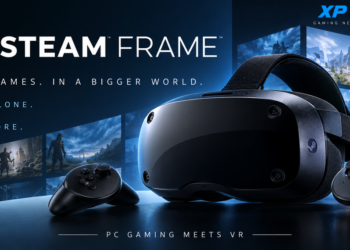



















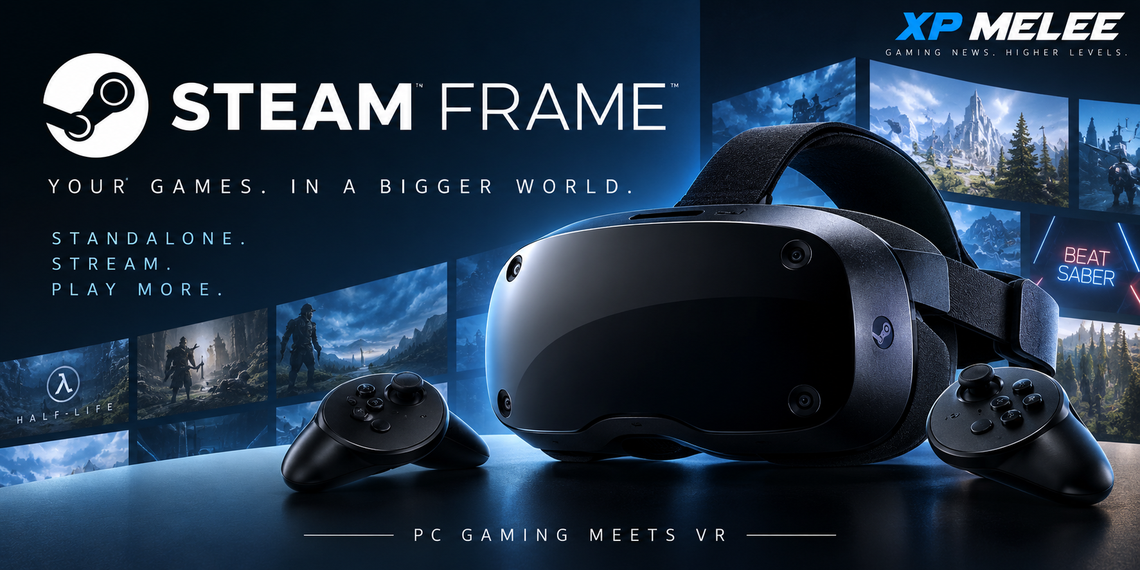
Valve appears to be getting closer to launching Steam Frame, and the company’s latest SteamVR update is giving VR players another reason to pay attention.
SteamVR 2.17 officially arrived on September 10 with a redesigned VR experience, more Steam features inside the headset, improved streaming and expanded OpenXR support.
With Valve continuing to prepare its VR ecosystem, Steam Frame could become one of the most important VR hardware releases of 2026.
SteamVR 2.17 Is Here
SteamVR 2.17 brings several useful changes for current VR players.
Achievements, community guides and Steam notes can now be accessed directly while using VR. Valve has also brought a Steam Deck-style Quick Access Menu to the VR Dashboard.
That gives players faster access to notifications, volume, brightness and battery information without leaving VR.
Valve has also improved streaming performance, addressed some NVIDIA-related stuttering and added support for 32-bit OpenXR applications.
These improvements are useful today, but they also make SteamVR feel increasingly prepared for Valve’s next generation of VR hardware.
Steam Frame Is Getting Closer
Valve has already announced Steam Frame, but two major questions remain: exactly when can players buy it, and how much will it cost?
There have been several signs that a launch is approaching.
Steam Frame has received regulatory certification in the United States, Valve has been preparing Steam packages connected to the hardware, and the company has created a “Great on Frame” section highlighting compatible experiences.
Valve previously said Steam Frame would ship during summer 2026.
Until Valve announces an exact date, however, reports suggesting a specific September launch date should be treated as speculation.
What Makes Steam Frame Different?
Steam Frame isn’t simply another traditional PC VR headset.
Valve is building it as a standalone device that can run compatible games locally while also allowing players to stream more demanding PC VR experiences from a gaming PC.
That could give Steam Frame an interesting position in the market.
Meta Quest has helped make standalone VR mainstream, while PC VR continues to offer some of the most demanding virtual reality experiences available.
Steam Frame could potentially bridge those two worlds.
Valve is also developing a Steam Frame verification system similar to Steam Deck’s compatibility program. That should make it easier for players to identify games designed to work properly on the hardware.
Valve Is Improving VR Streaming Too
Streaming appears to be another major part of Valve’s VR strategy.
SteamVR 2.17 includes improvements for slower network connections and additional image sharpening options. Valve has also been working on USB streaming support.
For players with powerful gaming PCs, reliable streaming could become one of Steam Frame’s biggest advantages.
Instead of choosing between standalone VR and PC VR, Steam Frame is being positioned to support both.
Could Steam Frame Challenge Meta Quest?
That will depend heavily on price.
Meta has already established the Quest platform as one of the biggest names in consumer VR. Valve will need to convince players that Steam Frame offers enough additional value to compete.
Steam integration could be a major advantage.
PC gamers already have large Steam libraries, established friend lists and access to SteamVR games. A headset built directly around that ecosystem could be especially attractive to existing Steam users.
However, hardware specifications alone won’t determine whether Steam Frame succeeds.
Valve needs competitive pricing, strong software support and a simple experience that works without constant troubleshooting.
2026 Could Be an Important Year for VR
Steam Frame arrives at an interesting time for virtual reality.
Standalone VR continues to evolve, PC VR remains popular among enthusiasts, and companies are experimenting with new ways to combine traditional gaming with VR and mixed reality.
Valve returning with dedicated VR hardware could bring additional competition to the market.
It could also encourage developers to pay more attention to PC VR again.
For now, we’re waiting for Valve to reveal the remaining details.
If Steam Frame delivers strong PC streaming, useful standalone gaming and the tight Steam integration Valve appears to be building, it could become one of the biggest VR hardware launches of 2026.
Would you choose Steam Frame over a Meta Quest headset? Let us know what you think.